Temple of Strangers › How to bow
How to bow at the Temple of Strangers: gassho, half bow and full bow
Temple of Strangers lets you bow in a shared online hall, and this guide shows how each bow is done. Every bow starts with gassho, joined palms: palms together at the chest, fingers up, then a bow from the waist. A full bow lowers the knees, hands and forehead to the floor, often three times.
1. Gassho: joined palms
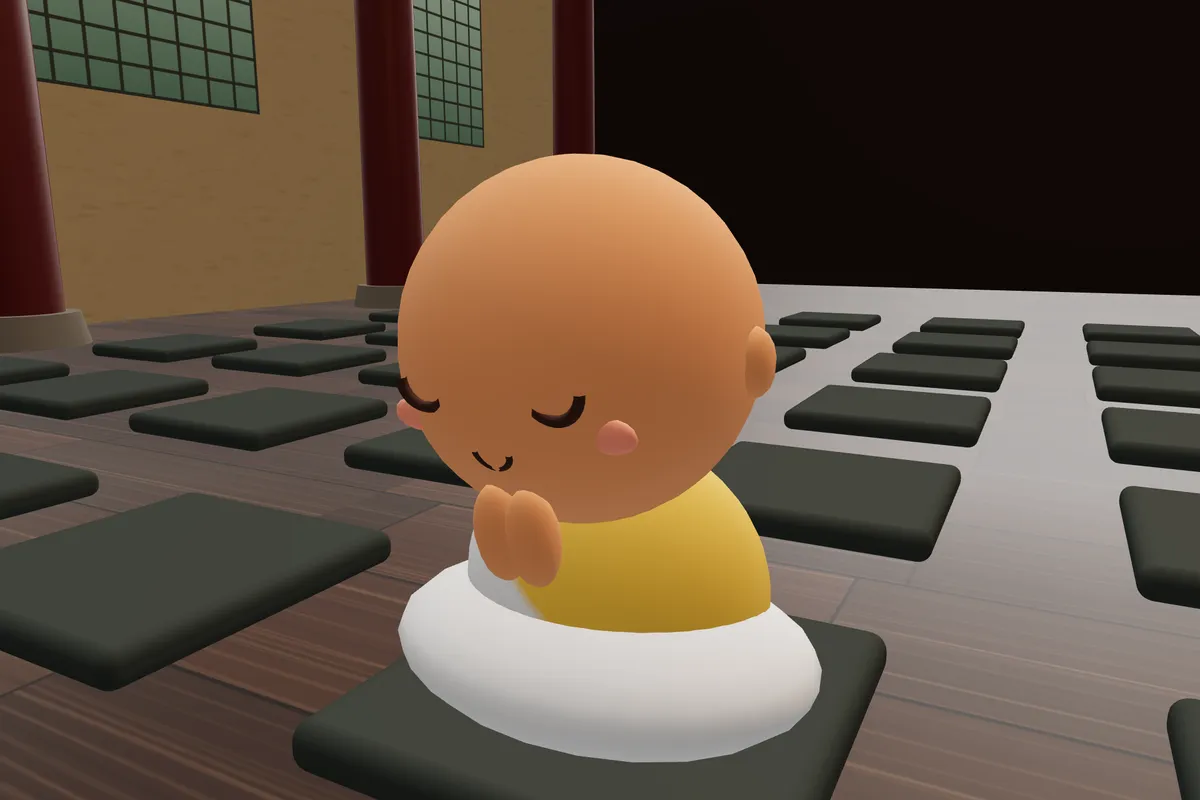
Gassho (Japanese) or hapjang (Korean) is the first gesture of every bow. It means “joined palms”.
- Bring your palms together at the middle of your chest, about a fist’s width away from it.
- Point your fingers up, with the fingertips at about the height of your nose or chin.
- Keep your elbows relaxed and slightly out, and your shoulders down.
Use it on its own to greet someone, to say thank you, and before and after a meal or a sit.
2. The half bow, from the waist
The half bow (Korean banbae, 반배) is the everyday bow: to greet a monk or a friend, and when you enter or leave a hall.
- Stand or sit straight and join your palms in gassho.
- Bow from the waist to about 45 degrees, keeping your back straight and your palms together.
- Pause for a breath, then rise slowly.
3. The full bow (prostration)
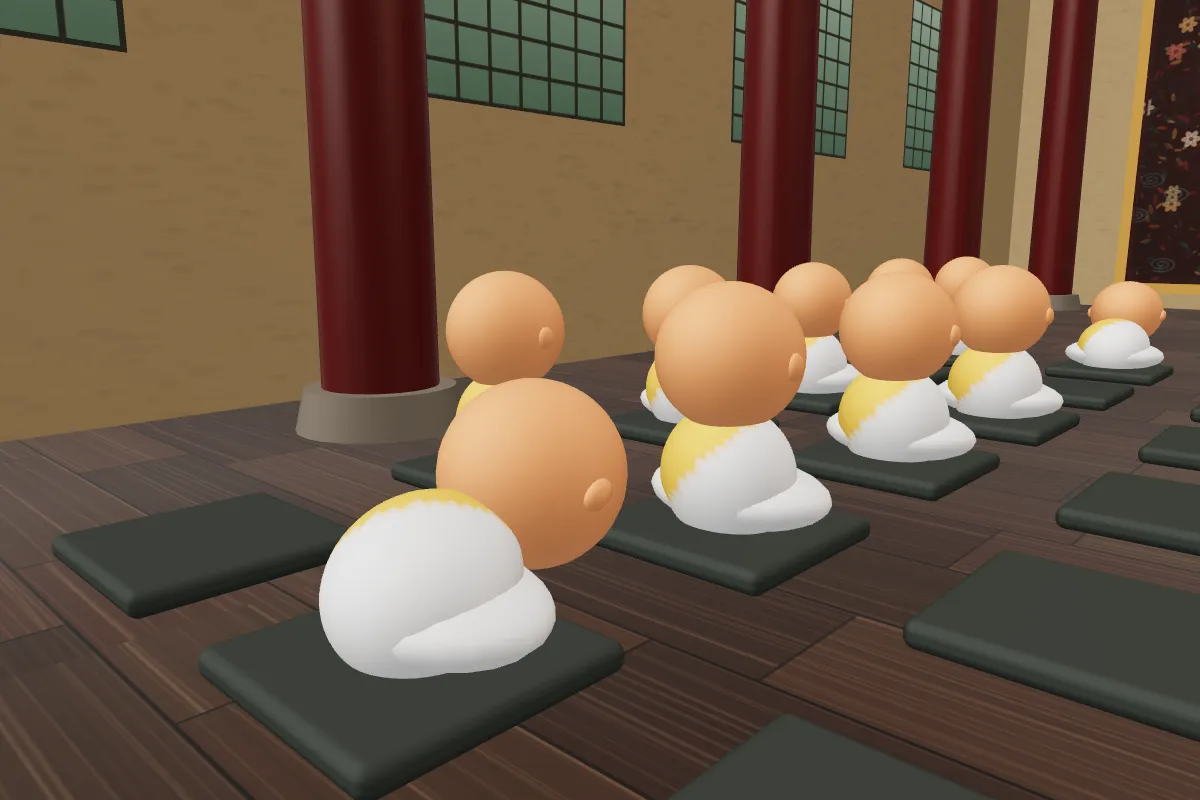
The full bow (Korean keunjeol, 큰절) brings five points to the floor: both knees, both hands and the forehead. That is why it is also called the five-point prostration.
- Stand with your palms joined in gassho.
- Lower both knees to the floor, keeping your back straight.
- Place your hands on the floor, then lower your forehead to the floor between them.
- In Korean temples, turn your palms up and lift them a little beside your head, as if lifting the Buddha’s feet.
- Turn your palms down, rise to kneeling, and stand up in gassho.
Full bows are usually done three times in a row, for the Buddha, the Dharma and the Sangha.
4. The 108 bows
In Korea, 108 bows (108배) is a practice of its own: 108 full bows in a row, one for each of the 108 afflictions the tradition names. At a steady pace it takes roughly 15 to 25 minutes, and many people do it in the morning as both practice and exercise. Keep count with a string of prayer beads, or with the 108-bead counter.
When to bow in a temple
- Entering the main hall: step in through a side door (the centre door is for the most senior monk) and make three full bows, or three half bows.
- Meeting a monk: a half bow with joined palms.
- Meals and sitting: joined palms before and after.
- Leaving: a half bow toward the Buddha before you step out.
Bowing in the Temple of Strangers
In the Temple of Strangers hall, the Palms and Bow buttons do these gestures in front of everyone sitting with you, and your name shows over your head for a moment. You can also knock the wooden fish between bows to keep a rhythm.
Questions people ask
What does gassho mean? How do you say it?
Gassho (合掌, said “GAH-show”) is Japanese for “joined palms”. Korean Buddhists call it hapjang (합장), and the Sanskrit name is añjali. It is a greeting, a thank-you and a sign of respect at once.
What is the proper way to greet a Buddhist?
Join your palms at your chest and bow slightly from the waist. A smile is enough; you don’t need special words. Many Korean Buddhists add “seongbul hasipsio” (성불하십시오), “may you become a Buddha”.
How do Buddhists greet each other?
With joined palms and a small bow, the same gesture used for a monk, a teacher or a friend. In Thailand and Cambodia the gesture is close to the everyday wai.
Why do Buddhists bow three times?
The three bows are for the Three Jewels: the Buddha (the teacher), the Dharma (the teaching) and the Sangha (the community that practises it).
Can you visit a Buddhist temple if you’re not Buddhist?
Yes. Temples welcome visitors. Dress modestly, take off your shoes before entering a hall, keep your voice low, use a side door rather than the centre one, and don’t touch statues or the altar. A half bow when you enter is a kind gesture, not a requirement.